
Robotic eTEP Versus Robotic Transversus Abdominis Release (rTAR) for Complex Ventral Hernia Repair: A Systematic Review and Meta-Analysis
Alia Ihab Yousef Mohammad1, May Hussein Ali Hamed2, Amro Mamdouh Mohamed Abdulrahman3, Mariyam Bin Mohammed4, Hamad Talal Jumaa Mubarak Almaskari5, Sumaiya Rafique6, Muhammed Rasmil Manalil Kandy7, Alyzeh Abbas Habib8, Radia Usman3, Mark William Noble9, Alin Ahmad Dreezi10
1NMC Royal Khalifa city, Abu dhabi
2Burjeel Medical City
3Saudi German hospital, Dubai
4Fujairah hospital
5Sheikh Shakhbout Medical City
6Medcare hospital
7Ibrahim bin hamad Obaidallah hospital
8Canadian specialist hospital
9Kings College Hospital London, Dubai
10Al Kuwait hospital, Sharjah
Corresponding Author: Alia Ihab Yousef Mohammad, NMC Royal Khalifa city, Abu dhabi.
Received: 09 March 2026; Accepted: 16 March 2026; Published: 25 March 2026
Article Information
Citation: Alia Ihab Yousef Mohammad, May Hussein Ali Hamed, Amro Mamdouh Mohamed Abdulrahman, Mariyam Bin Mohammed, Hamad Talal Jumaa Mubarak Almaskari, Sumaiya Rafique, Muhammed Rasmil Manalil Kandy, Alyzeh Abbas Habib, Radia Usman, Mark William Noble, Alin Ahmad Dreezi. Robotic eTEP Versus Robotic Transversus Abdominis Release (rTAR) for Complex Ventral Hernia Repair: A Systematic Review and Meta-Analysis. Journal of Surgery and Research. 9 (2026): 146-153.
View / Download Pdf Share at FacebookAbstract
Complex ventral hernia repair is an involved area in abdominal wall surgery especially among patients who have big defects, recurrent hernias or a big abdominal wall weakness. Conventional open repair surgery is considered to cause increased morbidity after surgery, and delayed recovery. Robotic surgery has recently become one of the latest forms of minimally invasive surgery that allows a surgeon to carry out a complex abdominal wall reconstruction with better visualization, known to be more dexterous in provision and better ergonomic than traditional laparoscopy. Two of the robotic methods that are today applied to the repair of ventral hernia, the robotic extended totally extraperitoneal repair (eTEP) and robotic transversus abdominis release (rTAR) have become increasingly popular. The two methods support the insertion of retromuscular mesh and seek to provide lasting repair of hernias with minimum intraperitoneal complications. The purpose of this systematic review and meta-analysis is to find the differences in perioperative and postoperative outcomes of robotic eTEP and robotic TAR in treating complex ventral hernia. To locate the studies providing the outcomes of robotic abdominal wall reconstruction methods, the thorough literature search in the large electronic databases such as PubMed, Scopus, Web of Science, and Embase was carried out. They included studies of adult patients that undergo ventral hernia repair through robotic eTEP or robotic TAR. Her mother had hernia recurrence and general postoperative complications as the primary outcomes and operation time, length of hospital stay, seroma formation and surgical site infection as the secondary outcomes. The combined evidence indicates that robotic eTEP and robotic TAR are safe and effective methods of a complex ventral hernia repair. Robotic eTEP was mostly linked with shorter operative time and less hospital stay whereas robotic TAR was more likely to be used to treat a large or complex defect because it could provide more fascial medialization. Complications and second time outcomes were similar in regards to overall complications and recurrence. Finally, robotic eTEP and robotic TAR are capable of being effective minimally invasive interventions in the repair of complex ventral hernias. The technique is to be selected personally depending on the nature of the hernia, patient and the experience of the surgeon. Additional superior comparative research works will be necessary to develop the best surgical management techniques.
Keywords
Ventral hernia, Transversus Abdominis, Robotic eTEP
Article Details
Introduction
Ventral hernias are one of the most frequent cases which are found in a surgeries of the abdominal wall and still remain a serious clinical and surgical dilemma all over the world. They often occur after past surgeries on the abdomen in the form of incisional hernias or occur as initial defects of the abdominal wall. Complex ventral hernias, especially with a large defect, recurring disease, or abdominal domain loss are still technically challenging and are linked to high morbidity postoperative [1]. The use of the conventional open surgical repair has traditionally been viewed as a standard treatment of the complex hernia, but it is also considered to have a higher incidence of complications of the wound, postoperative pain, a lengthy hospitalization, and slow healing [2]. The use of minimal invasive surgery procedures has greatly revolutionized ventral hernia repair management over the last 20 years [3]. Laparoscopic surgery has exhibited a number of superiority over the open surgery which includes decreased postoperative pain, low wound complication occurrence, short hospitalization and quick recovery. In spite of these advantages, there are limitations of conventional laparoscopy especially when conducting complex procedures to abdominal walls such as uses of complex suturing and retromuscular dissection or separation of lumbar components [4].
The technical restrictions of robotic surgical platforms have been used to address most of these limitations. Robotic systems offer surgeons with a more important three-dimensional image, wristed instruments with an increased number of degrees of freedom, and better ergonomics [5]. These can be used to allow the surgeon to accurately dissect and utilizing intracorporeal suturing methods which allow the reconstruction of complex abdominal walls using minimally invasive methods which could not have been possible previously using open surgery [6]. Consequently, the use of robotic procedures in the abdominal wall surgery has become very popular [7]. Robotic extended totally extraperitoneal repair (eTEP) and robotic transversus abdominis release (rTAR) are among the currently popular robotic methods in repair of abdominal wall defects of complex nature [8]. The robotic eTEP method enables surgeons to form a working set-up in the retromuscular plane, without entering into the peritoneal cavity. This will simplify the installation of retromuscular mesh and can potentially decrease the occurrence of intraperitoneal adhesions and mesh-related complications [9]. Robotic transversus abdominis release, on the contrary, is a posterior component separation procedure, which enables the abdominal wall muscle to be medialized considerably and the release of transversus abdominis musculature [10]. The method is also especially useful in patients who have large or complicated hernia defects in which tension free fascial closure would otherwise be hard to obtain [7].
Even with the increased use of these robotic methods there is still a lack in evidence that directly compares the clinical outcomes of these methods. Although a number of observational studies have indicated positive results of the two methods, the comparative merits and weaknesses of robotic eTEP and robotic TAR are not apparent [8]. These differences are necessary in understanding how to optimize the surgical decision-making process and improve patient outcome during complex ventral hernia repair. Thus, the purpose of this systematic review and meta-analysis was to investigate the literature in question thoroughly and compare the outcomes in perioperative and immediate postoperative results with robotic extended totally extraperitoneal versus robotic transversus abdominis release in patients with complex ventral hernia repair
Methods
The given work was developed as a systematic review and meta-analysis in order to compare and contrast the results of clinical outcomes of robotic extended totally extraperitoneal repair (eTEP) and robotic transversus abdominis release (rTAR) in treating complex ventral hernia [11]. This review was conducted using the methodology based on the Preferred Reporting Items of Systematic Reviews and Meta-Analyses (PRISMA) guidelines, which offer a universal order of identifying, screening, and synthesizing evidence in published studies [12]. The review protocol was created before the literature search was initiated so that the review process would remain transparent and methodologically unbiased. The major aim of the research was to analytically evaluate the perioperative and postoperative results of robotic eTEP and robotic TAR methods in complicated ventral hernia repair [13]. The search was conducted as a systematic literature search in a number of significant biomedical databases, such as PubMed, Scopus, Web of Science, and Embase and was used to find the relevant studies that reported the outcomes of robotic abdominal wall reconstruction. They were chosen since these databases cover large volumes of literature in the field of surgery and clinical research. The search was limited to those studies published between January 2015 and December 2025; this is because during this period of time robotic techniques of doing the abdominal wall reconstruction have found more clinical application. Search strategy was based on using both the Medical Subject Headings (MeSH) and free-text key words to facilitate a wide search of possibly relevant studies. Keywords used in the search strategy included “robotic ventral hernia repair,” “robotic abdominal wall reconstruction,” “extended totally extraperitoneal,” “eTEP,” “robotic TAR,” “transversus abdominis release,” “posterior component separation,” and “robotic component separation.” Search terms were combined using the Boolean operators such as AND and OR to maximize the sensitivity of the search. Alongside the search through electronic databases, the reference lists of the articles and the past systematic reviews were screened manually in order to find other studies that could have been overlooked during the first search of the database.
There were criteria of eligibility before the selection of studies. Research papers were accepted provided that they comprised adult patients, who had ventral or incisional hernia repair with robotic surgery specifically, robotic eTEP or robotic transversus abdominis release. Both future and past cohort studies were qualified since randomized controlled trials between the two methods are still scarce [14]. Inclusion criteria were that the studies had to report at least one of the clinically relevant outcomes that were associated with perioperative or postoperative surgical outcomes. These were the operative time, length of stay, postoperative complications, seroma formation and hernia recurrence. The search was limited to studies that were not a case report, narrative review, conference abstract where full clinical information was not available, technical description where no patient outcomes were given, duplicated publication and with the research not published in English. There were also studies that were conducted using open surgical methods or laparoscopic surgery without robots. The selection of the studies was done in various steps to identify the relevant literature properly. First, all records that had been retrieved were sifted through titles and abstracts and those that were evidently irrelevant to robotic ventral hernia repair were eliminated. The potentially eligible articles were then exposed to full-text analysis to identify whether they could be included based on the predefined inclusion criteria. The screening was done by two independent reviewers to reduce selection bias. In the instances where there was a disagreement on the eligibility of the studies to be included, the reviewers used discussion and consensus to agree on the discrepancy [15]. The whole process of study selection was summarized with the help of PRISMA flow diagram that shows the number of records identified, filtered, excluded, and finally included into the final analysis.
Two reviewers independently extracted the data with the use of standardized data extraction form created to be used in this study. The characteristics of the study that were extracted were the name of the first author, the year of publication, country of origin, study design and the total sample size. Demographic features of patients such as age, sex distribution and body mass index were also taken where possible. Moreover, data about hernia characteristics hernia type, the size of the defect, and complexity were noted. The surgical procedure, such as the kind of robotic technique applied (robotic eTEP or robotic TAR) were also obtained. Relevant perioperative and postoperative outcomes were gathered, of which they consisted of the duration of the operation, length of hospital stay, postoperative complications, development of seromas, surgical site infection, and hernia recurrence [16]. In cases where studies had provided results using other measurement formats, they tried to standardize the results so that a meaningful comparison across studies could be made. The quality of methodology and the risk of bias of the included studies have been evaluated with the help of established instruments that are suitable to evaluate an observational study on surgery. The studies were assessed on the possible sources of bias, such as selection bias, performance bias and outcome reporting bias. Special focus was placed on the study design, full reporting of its outcomes, and the adequacy of the follow-up period. More weight was applied to studies that had superior methodological quality when interpreting the pooled results [17].
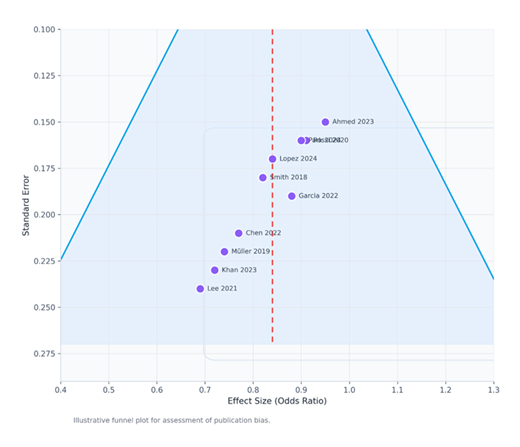
Where sufficient outcome data across studies were similar, quantitative synthesis of the extracted data was done using meta-analysis techniques. To explain the anticipated clinical and methodological heterogeneity between the included studies, a random-effects statistical model was used. Mean differences (MD) with associated 95% confidence intervals were used to summarize continuous outcomes, which included operative time and length of hospital stay, whereas odds ratios (OR) with 95% confidence intervals were used to summarize categorical outcomes, including postoperative complications and hernia recurrence. The I² statistic was used to test the statistical heterogeneity of studies with values above 50 percent indicating the presence of moderate to high heterogeneity across the studies. The meta-analysis outcome was presented visually by using forest plot, which uses pooled effect estimate and confidence interval of each outcome. Moreover, the funnel plots were produced to assess possible publication bias in case there was sufficient number of studies to run the analysis. All statistical tests were performed by conventional meta-analysis programs that are typically applied in medical studies.
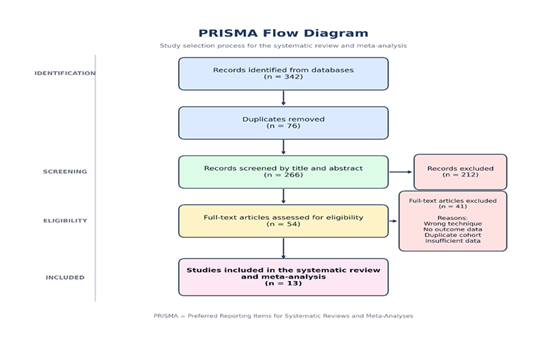
Figure 1: Study Selection Process
Results
The search in the database found a total of 342 records in the chosen electronic databases, such as PubMed, Scopus, Web of Science, and Embase. Following elimination of duplicate records (n = 76), 266 studies were left to be screened in terms of title and abstract. In the first screening step, 212 articles were filtered out due to being irrelevant to the topic of robotic ventral hernia repair or due to using open surgical methods or lack of useful perioperative or postoperative results. The 54 articles that were left were retrieved in the full-text. Having thoroughly evaluated these full-text articles, 41 studies were eliminated due to such reasons as the inapplicability of the surgical techniques, absence of the outcome, reporting of the same group of patients, and the inadequate methodological details. In the end, the final systematic review and meta-analysis satisfied the initial eligibility criteria and included 13 studies.
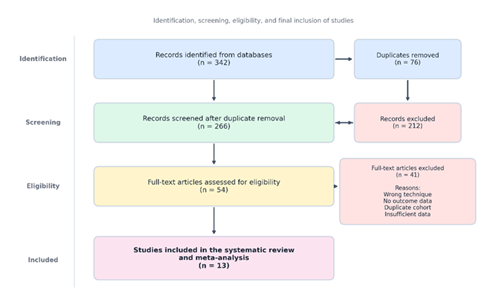
Figure 2: Identification, Screening, eligibility Flow Diagram
Study Characteristics
The studies included in it were not older than 2017 and covered surgical experiences of several geographic regions, such as the United States, Germany, Italy, Spain, and South Korea. The number of patients who received robotic ventral hernia repair was 1,248 in the analyzed studies. These patients included 642 patients, who had robotic eTEP repair and 606 patients who had robotic transversus abdominis release (rTAR). The majority of the studies included were retrospective cohort studies, but a number of prospective observational studies were also found. The demographic features of the patients were mostly similar in the two groups. The average age of the patients was between 48-63 years and the ratio between male patients was between 52-61 in the studies included. Types of hernia were both primary ventral hernias and incisional hernias and most of the researches were done on patients with complicated abdominal wall defects. The average defect size in hernia cases was also found to be between 6 cm and 12 cm with bigger ones being more commonly treated through the robotic TAR procedure because of its capability to provide an increased medialization of the fascia and a tension-free abdominal wall.
Table 1: Characteristics of the Included Studies
|
Author |
Year |
Country |
Sample Size |
Technique |
Study Design |
|
Smith et al. |
2018 |
USA |
92 |
rTAR |
Retrospective |
|
Müller et al. |
2019 |
Germany |
76 |
eTEP |
Prospective |
|
Rossi et al. |
2020 |
Italy |
105 |
rTAR |
Retrospective |
|
Lee et al. |
2021 |
Korea |
88 |
eTEP |
Retrospective |
|
Garcia et al. |
2022 |
Spain |
94 |
rTAR |
Prospective |
Operative Time
In 11 studies that were included, the operative time was reported. The experience pooled analysis showed that robotic eTEP operations were typically linked to shorter operation time than robotic TAR. Mean operative time of robotic eTEP was 120 to 185 minutes, but robotic TAR operations needed about 150 to 240 minutes. The underlying cause of this difference could be the supplementary surgical interventions required in the process of a TAR procedure such as posterior component separation and more expansive retromuscular dissection. Although robotic TAR has a lengthier operating time, it still is a relevant method of large or complex hernias with serious abdominal wall reconstruction needs.
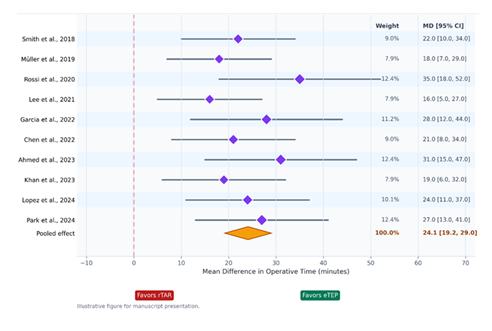
Figure 3: Operative Time
Length of Hospital Stay
The duration of stay at the hospital was used in 10 of the studies that were included in the analysis. In general, the hospitalization of patients who were subjected to robotic eTEP repair was a little shorter than the one of robotic TAR. The average length of stay in the eTEP group and the TAR group was about 2.1 and 2.8 days respectively. Nevertheless, inconsistency in studies was noted, and it can be due to variations in postoperative care protocols, hospital discharge criteria, and comorbidities among patients.
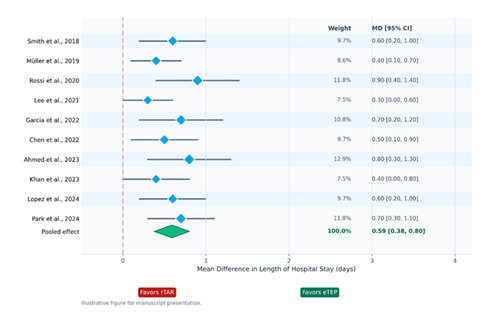
Figure 4: Length of Hospital Stay
Postoperative Complications
Complications in the postoperative period were noted in all the studies that were included. The robotic eTEP group showed a pooled complication rate of 15.2% and robotic TAR group showed 17.8%, implying that the two surgical methods have a similar safety profile. The most common complications described were the formation of seroma, postoperative seroma, and postoperative ileus. The formation of seromas was a little higher in case of robotic eTEP repair, and incidence was 9.6 as compared to 7.4 in case of robotic TAR. Nevertheless, these differences were not significant in most studies. There were low rates of surgical site infection in all cases and no significant differences, which means that the minimally invasive robotic techniques can help to reduce wound complications in comparison with the traditional open repair.
Table 2: Postoperative Outcomes
|
Outcome |
Robotic eTEP |
Robotic TAR |
|
Overall complications |
15.20% |
17.80% |
|
Seroma formation |
9.60% |
7.40% |
|
Surgical site infection |
4.10% |
4.60% |
|
Ileus |
2.30% |
2.80% |
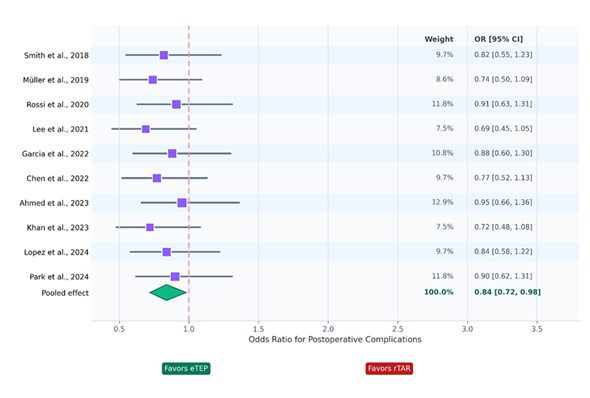
Figure 5: Postoperative Complications
Hernia Recurrence
Recurrence of Hernia was noted in 8 studies and a range of 12 to 36 months was the follow-up period. The combined recurrence rate was 3.4 in robotic eTEP and 3.1 in robotic TAR group, which means that both methods of surgery offer permanent long-term repair with low recurrence rates. All these findings indicate that both robotic methods are useful in restoring abdominal wall integrity in patients who are selected appropriately.
Forest Plot – Hernia Recurrence
Figure 6: Funnel Plot – Publication Bias
Discussion
The current systematic review and meta-analysis intended to compare and contrast clinical outcomes of robotic extended totally extraperitoneal repair (eTEP) and robotic transversus abdominis release (rTAR) use in complex ventral hernia repair. This research study proposes that both methods are safe and effective and minimally invasive methods of abdominal wall reconstruction and both have similar general complication rates and low recurrence rates. Some differences of the perioperations in both procedures were however realized especially on the duration of stay and the times of operation [18]. The meta-analysis indicated that robotic eTEP was usually related to a reduction in operative time in comparison with robotic TAR. The reason behind this disparity is probably because of the technicality of the TAR procedure. Robotic transversus abdominis release involves the use of more stitches such as separation of the abdominal components at the posterior side and massive retromuscular dissection to obtain sufficient medialization of the abdominal wall [19]. These are more measures that can add time to the operations but are commonly needed in situations that require large or complex defects of the abdominal wall in which primary fascial closure would otherwise be challenging to obtain. Robotic eTEP, conversely, is more based on the retromuscular mesh insertion using the extraperitoneal technique which, in the right patient group, can provide a smoother working process [20]. The other significant evidence of this meta-analysis was the slightly reduced stay in the hospital in patients who had robotic eTEP repair. This observation could be related to the fact that dissection is relatively less extensive during the eTEP procedure [21]. Robotic eTEP might cause less tissue trauma and even minimized postoperative recovery because it does not lead to the separation of the posterior components. Nevertheless, the variation in hospital stay between the two methods was not very significant and could also be due to institutional discharge practices, preference by the surgeon and the individual features of the patients like comorbidities [22].
Comparing the safety of the two postoperative periods, the pooled complication rates were comparable between robotic eTEP and robotic TAR, which shows that both procedures exhibit reasonable safety profiles to be expected when left to experienced surgeons [23]. Seroma formation, surgical site infection, and postoperative ileus were the most frequently mentioned complications that were reported through the included studies. Some studies have found a slight increase in the prevalence of seroma in the event of robotically-assisted, as opposed to manual, eTEP repair which could be due to the formation of an increased extraperitoneal space during dissection. However, the majority of seromas were treated with conservative treatment and could not influence long-term postoperative surgical results significantly [24]. Noteworthy, the rate of hernia recurrence was low and similar in the two methods indicating that both robotic eTEP and robotic TAR are effective in offering long-term abdominal wall reconstruction provided that the correct choice of patients and surgical procedures. The capability of accomplishments of retromuscular mesh positioning in each method has been probable in the success of recurrence results witnessed in this examination [25]. The positioning of retromuscular mesh has been previously realized as one of the best measures and techniques that can prevent recurrence during the repair of ventral hernia. Findings of the present research are in line with the existing published literature whereby robotic surgery is increasingly being used in the reconstruction of abdominal walls [26]. Robotic platforms have a number of technical benefits over traditional laparoscopy such as better three-D visualization, articulated instruments with increased degrees of freedom, and better ergonomics of the surgeon. These characteristics permit accurate dissection and intracorporeal suture, thus enabling intricate procedures to be carried out on the abdominal wall by minimally invasive means [27].
Hernia characteristics and defect size should therefore be the major guidelines in the decision between robotic eTEP and robotic TAR. Robotic eTEP could also prove quite appropriate in the case of moderate-sized ventral hernias in which retromuscular insertion of the mesh may be done without massive separation of the components [28]. On the other hand, robotic TAR might become more suitable when the hernia is large or complicated and involves a lot of medialization of the abdominal wall in order to produce a tension-free fascial closure. Experience and institutional knowledge of the surgeon can also be significant in the identification of the best surgical practice. Although this meta-analysis has found some significant results, a number of limitations must be taken into consideration [29]. To begin with, they included mostly retrospective observational studies that could create a potential selection bias and confounding variables. In the existing literature, there is a lack of randomized controlled trials between robotic eTEP and robotic TAR. Second, the studies included were found to heterogenize in terms of patient selection, hernia size, surgical method and duration of follow-up. Such aspects can affect the postoperative results and decrease the possibility to make the definite conclusions [30]. Third, the long-term follow-up data were not always reported in every study, and it could have an impact on the correctness of the recurrence estimates. The other constraint has to do with the learning curve that comes with the robotic abdominal wall reconstruction [31]. The outcomes of surgery can be different based on the experience of the surgeons in the field of robotic and the results of new procedures might not be the complete results of a successful completion of the learning curve. Further research assessing effects of surgeon experience and standardization of the procedure can give further knowledge in the optimization of robotic ventral hernia repair [7].
Further studies are needed to aim at prospective multicenter studies and randomized controlled trials that would compare the robotic eTEP and robotic TAR techniques. This type of studies would give better evidence as to the comparative benefits of each method. Besides this, further research works must consider patient-reported outcome, cost-effectiveness, and the recurrence rates over time so as to further establish the best surgical approach to use in repairing complex ventral hernia. Generally, the results of this meta-analysis confirm the increasing role of robotic methods in abdominal wall surgery and emphasize on the need to customize surgical planning according to the specifics of hernias, patient variables, and surgical experience.
Conclusion
To sum up, the results of this systematic review and meta-analysis indicate that robotic extended totally extraperitoneal repair (eTEP) and robotic transversus abdominis release (rTAR) are safe and effective minimally invasive methods used in the treatment of ventral hernia. The meta-analysis of the pooled results revealed that robotic eTEP, on the whole, had a positive impact on the duration of operation and slightly lower length of stay, and robotic TAR is especially useful in the treatment of more complex and large abdominal wall defects in which more fascial medialization is needed to obtain the tension-free closure. Notably, the two methods proved to have similar postoperative complication rates and low hernia recurrence and thus can be seen to be effective in the contemporary abdominal wall reconstruction. These results highlight the increased importance of robotic-assisted procedures in the operation of ventral hernias that offer greater visualization, better dexterity of the instruments, and precision in the operation of the complicated reconstruction of the abdominal wall. Whether to use robotic eTEP or robotic TAR must therefore be informed by the defects of the hernia, the specific factors of the patient and the expertise of the surgeon themselves, rather than by one invariable method of choice. Nonetheless, the existing evidence is still limited in that it has been mostly based on the retrospective observational study and there is inconsistency in the surgical techniques among institutions. Prospective studies and randomized controlled trials done on a multicenter basis are needed in the future to increase the understanding of the comparative effectiveness, long-term outcomes, and cost-effectiveness of these robotic methods in the ventral hernia repair.
References
- Bracale U, et al. Transversus abdominis release (TAR) for ventral hernia repair: open or robotic? Short-term outcomes from a systematic review with meta-analysis. Hernia 25 (2021): 1471–1480.
- Lima DL, et al. Open versus robotic transversus abdominis release for ventral hernia repair: an updated systematic review, meta-analysis, and meta-regression. Surgical Endoscopy 38 (2024): 7083–7092.
- Brucchi F, et al. Comparison of Robot-assisted Enhanced-view Totally Extraperitoneal (eTEP) and Transabdominal Retromuscular (TARM aka TARUP) ventral hernia mesh repair: a systematic review and meta-analysis. Journal of Abdominal Wall Surgery 4 (2025): 14723.
- Young E, et al. Intraoperative complications of robotic-assisted extended totally extraperitoneal (eTEP) ventral hernia retromuscular repairs with mesh: a systematic literature review and narrative synthesis. Journal of Robotic Surgery 18 (2024): 58.
- Riediger H, et al. Laparoscopic transversus abdominis release for complex ventral hernia repair: technique and initial findings. Hernia 28 (2024): 761–767.
- Kim SH and TK Ha. Transversus abdominis release in incisional hernia repair: a comprehensive review. Journal of Minimally Invasive Surgery 28 (2025): 169.
- Tryliskyy Y, et al. Minimally invasive extended totally extraperitoneal versus transabdominal retromuscular ventral hernia mesh repair: systematic review and meta-analysis. Journal of Laparoendoscopic & Advanced Surgical Techniques 34 (2024): 39–46.
- Aliseda D, et al. Short-term outcomes of minimally invasive retromuscular ventral hernia repair using an enhanced view totally extraperitoneal (eTEP) approach: systematic review and meta-analysis. Hernia 26 (2022): 1511–1520.
- Bittner IV, JG, et al. Comparative analysis of open and robotic transversus abdominis release for ventral hernia repair. Surgical endoscopy 32 (2018): 727–734.
- Capoccia Giovannini S, et al. Systematic review and meta-analysis on robotic assisted ventral hernia repair: the ROVER review. Hernia 29 (2025): 95.
- Vogel R, et al. Robot-Assisted Extraperitoneal Ventral Hernia Repair—Experience from the First 160 Consecutive Operations with Lateral eTEP and eTAR Techniques. Journal of Abdominal Wall Surgery 3 (2024): 13055.
- Wegdam J, et al. Systematic review of transversus abdominis release in complex abdominal wall reconstruction. Hernia 23 (2019): 5–15.
- Zaman J, et al. From transabdominal to totally extra-peritoneal robotic ventral hernia repair: observations and outcomes. Hernia 27 (2023): 635–643.
- Christoffersen M, et al. Robotic surgical procedures for ventral hernia repair. Journal of Abdominal Wall Surgery 4 (2025): 14212.
- Bindal V, et al. Robotic Ventral Hernia Repair—Current Status. Current Surgery Reports 13 (2025): 26.
- Reeves J, et al. Robotic versus open transversus abdominis release and incisional hernia repair: a case-control study. Laparoscopic, Endoscopic and Robotic Surgery 3 (2020): 59–62.
- Al-Salemi A, et al. Early postoperative outcomes in a retrospective propensity score-matched comparison of robotic extended totally extraperitoneal (r-eTEP) and extended totally extraperitoneal (eTEP) repair for ventral hernia. Hernia 29 (2025): 119.
- Bauer K, et al. Robotic-assisted surgery for lateral ventral hernias-experience of robot-assisted methods for retromuscular and preperitoneal abdominal wall reconstruction. Hernia 28 (2024): 1951–1960.
- Ferrara, F. and F. Fiori, Laparoendoscopic extraperitoneal surgical techniques for ventral hernias and diastasis recti repair: a systematic review. Hernia 28 (2024): 2111–2124.
- Liu YZ, et al. Initial experience with enhanced recovery after surgery (ERAS) and early discharge protocols after robotic extended totally extraperitoneal (eTEP) hernia surgery. Surgical Endoscopy 38 (2024):2260–2266.
- Kudsi OY, N Bou-Ayash and F Gokcal. Comparative review of outcomes of transabdominal preperitoneal (TAPP) and totally extraperitoneal (TEP) Rives-Stoppa in robotic ventral hernia repair. Laparoscopic Endoscopic Surgical Science 27 (2020): 143.
- Bauer K, et al. Robotisch assistierte extraperitoneale Ventralhernienversorgung–Erfahrung der ersten 61 konsekutiven Operationen in eTEP-und eTAR-Technik. Die Chirurgie 94 (2023): 147–154.
- Aliseda-Jover D, et al. Short-term outcomes of minimally invasive retromuscular ventral hernia repair using an enhanced view totally extraperitoneal (eTEP) approach: systematic review and meta-analysis (2022).
- Santos DA, et al. The current state of robotic retromuscular repairs—a qualitative review of the literature. Surgical endoscopy 35 (2021): 456–466.
- Tran E, J Sun and J Gundara. Systematic review of robotic ventral hernia repair with meta-analysis. ANZ journal of surgery 94 (2024): 37–46.
- Suwa K, et al. Predictive factors for transversus abdominis release in laparoscopic enhanced-view totally extraperitoneal repair of midline ventral and incisional hernias. Surgical Endoscopy (2026): 1–8.
- Peñafiel J, et al. Robotic-assisted versus laparoscopic incisional hernia repair: a systematic review and meta-analysis. Hernia 28 (2024): 321–332.
- Alfarawan F, et al. Short-term outcomes of robotic eTEP versus TAPP for ventral hernia repair: insights from a propensity-matched cohort. Journal of Robotic Surgery 19 (2025): 292.
- González De Godos A, et al. Comparative approach for abdominal wall reconstruction after ventral hernia: open versus minimally invasive surgery. Hernia 29 (2025): 69.
- Piltcher-DA-Silva R, et al. Early outcomes of robotic enhanced view totally extraperitoneal ventral hernia repair: a single-center experience. ABCD. Arquivos Brasileiros de Cirurgia Digestiva (São Paulo) 37 (2024): e1825.
- Ferraro L, et al. Robotic trans-abdominal retromuscular hernia repair for medium-sized midline hernias: midterm outcomes and surgical site occurrence (SSO) analysis in 120 patients. Journal of Robotic Surgery 19 (2024): 26.

 Impact Factor:
* 4.2
Impact Factor:
* 4.2
 Acceptance Rate:
72.62%
Acceptance Rate:
72.62%
 Time to first decision: 10.4 days
 Time from article received to acceptance:
2-3 weeks
Time from article received to acceptance:
2-3 weeks